Home › Carbon Filtration › Chlorine Smell
How to Get Rid of the Chlorine Smell in Your Tap Water
If your water smells like a swimming pool, especially in the shower, that is chlorine. Bryan and College Station add it to keep water safe on its way to your home. Here are quick fixes that work today and the permanent fix for the whole house.
- Both cities disinfect with chlorine: about 1.66 ppm on average in College Station and 2.25 ppm in Bryan. The legal limit is 4 ppm.
- The smell is normal and expected, not a sign that something is wrong.
- Quick fixes: a carbon pitcher or fridge filter, or letting a pitcher of water sit uncovered in the fridge.
- Permanent fix: a whole-home carbon filter removes chlorine at every faucet and shower.
Get your free water consultation →Take the 3-question online quiz. It takes under 30 seconds.
A pool-like smell from the tap is one of the most common water complaints in Bryan and College Station. It can be strong enough to notice in a glass of water, and stronger still in a hot shower. Here is where it comes from and how to get rid of it.
Why your water smells like chlorine
Bryan and College Station both disinfect their water with chlorine. Chlorine kills bacteria and keeps the water safe as it travels through miles of pipe to your home. A small amount stays in the water on purpose, so it keeps protecting the water all the way to your faucet.
Average chlorine level in the 2024 report.
Average chlorine level in the 2025 report.
Both cities are well below it.
Chlorine residuals in the latest reports ranged from about 1.0 to 2.2 ppm in College Station and 2.0 to 2.25 ppm in Bryan. Those levels are safe to drink. But many people can smell and taste chlorine at levels well below the limit, so noticing it does not mean anything is wrong. Chlorine also forms small amounts of disinfection byproducts. Both cities test below the legal limits for these, but they are detectable, which is one more reason some families filter it out. See what the latest city reports show.
Why it is worse in the shower
Hot water releases chlorine into the air as steam, so a hot shower in a closed bathroom concentrates the smell. Many people also notice dry skin or hair after showering in chlorinated water. A drinking water filter at the kitchen sink does nothing for this. Only a filter that treats the water feeding the shower helps.
Quick fixes you can try today
- Let it sit. Fill a pitcher and leave it uncovered in the fridge for a few hours. Chlorine gradually escapes into the air. This tip works in Bryan and College Station because both cities use free chlorine. In cities that use chloramine, it mostly does not.
- Use a carbon pitcher or fridge filter. These use carbon, which removes chlorine taste and smell from drinking water. They do not help with the salty taste or with shower water.
- Chill it. Cold water tastes and smells less of chlorine than room-temperature water.
- Try a shower filter. A filter that screws onto the showerhead can reduce chlorine in the shower, though small filters have limited capacity with hot water.
| Option | Drinking water | Showers | Effort |
|---|---|---|---|
| Let water sit in the fridge | Yes | No | Plan ahead |
| Pitcher or fridge filter | Yes | No | Change cartridges often |
| Shower head filter | No | One shower | Change cartridges often |
| Whole-home carbon filter | Every tap | Every shower | Backwashes itself |
The permanent fix: whole-home carbon
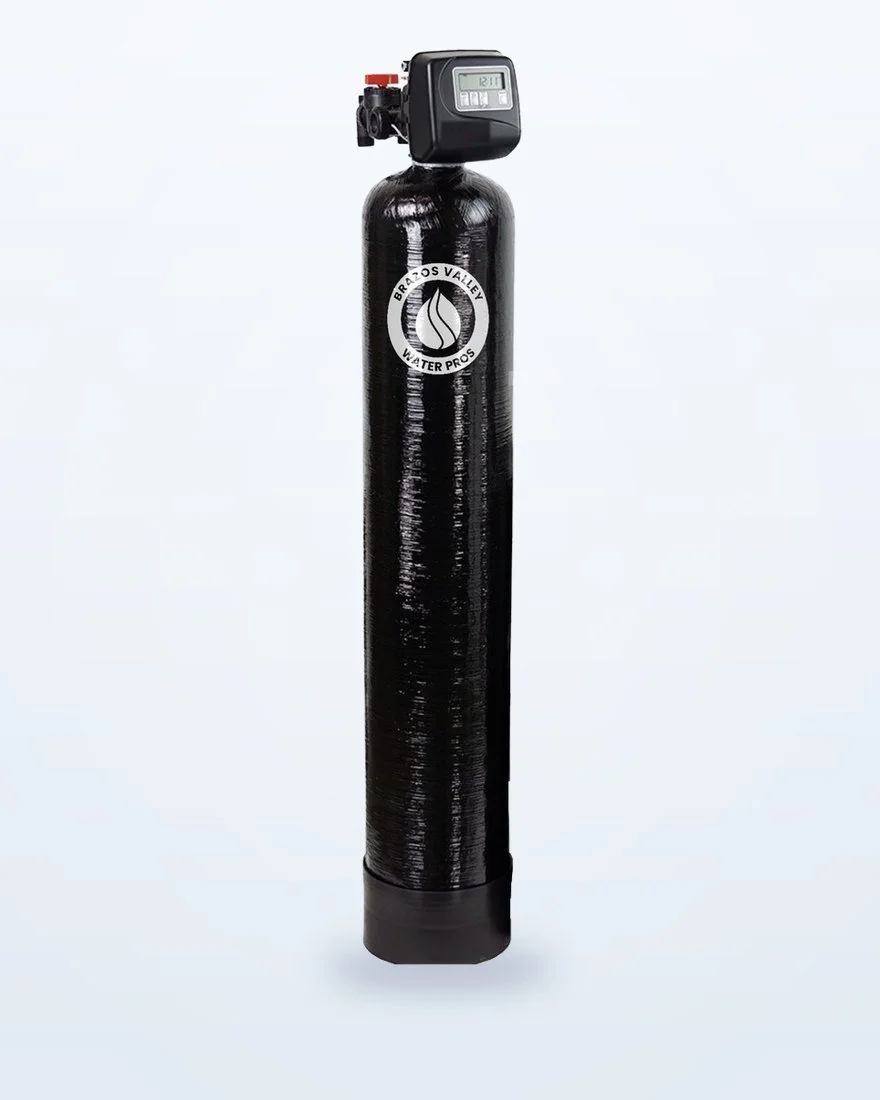
A whole-home carbon filter installs on the main water line, so every faucet, shower and appliance gets water without the chlorine smell. The system Brazos Valley Water Pros installs for city homes is a 10" x 54" tank of coconut-shell carbon with a control valve that backwashes on a schedule, so the filter rinses itself clean. There is no salt and no second tank.
One thing carbon does not fix is the salty, flat taste. That comes from sodium and dissolved solids, and the fix is reverse osmosis at the kitchen sink. Compare reverse osmosis and carbon filtration.
Common questions
Why does my tap water smell like chlorine?
Is the chlorine level in my water safe?
Does boiling water remove chlorine?
Will a water softener remove chlorine?
Why does my water smell stronger some days?
More Bryan & College Station water guides
- Why does my tap water taste salty?
- Reverse osmosis vs. whole-home carbon filter
- Is College Station tap water safe to drink?
- Do you need a water softener in College Station?
- Well water testing in the Brazos Valley
Find out what your water actually needs
Take the free 3-question online quiz, then talk with us by phone or text. We'll recommend a system based on your answers and what we see in water across your area. Every system is installed by licensed independent plumbers, with no high-pressure sales visit.
Get Your Free Water Consultation → Or call or text (979) 721-5597Chlorine and byproduct figures are from the City of Bryan 2025 and City of College Station 2024 drinking water quality reports. Chlorine levels vary across each city's system and over time. Treatment results are general guidance, not a certified performance claim.