Home › City Water Treatment › RO vs. Carbon
Reverse Osmosis vs. Whole-Home Carbon Filter: Which Do You Need?
They solve different problems. A whole-home carbon filter fixes the chlorine taste and smell at every tap. Reverse osmosis fixes the salty taste in the water you drink. Here is how each one works and how to choose for Bryan and College Station water.
- Whole-home carbon filter: treats all the water entering your home. Removes chlorine taste and smell and reduces disinfection byproducts at every faucet and shower.
- Reverse osmosis (RO): treats drinking water at one sink. Removes about 90–95% of dissolved solids, including the sodium behind the salty taste.
- Carbon does not fix the salty taste. RO does not treat your showers.
- Many Bryan and College Station city homes use both.
Get your free water consultation →Take the 3-question online quiz. It takes under 30 seconds.
If you have shopped for water treatment in Bryan or College Station, you have probably heard both terms. They are often sold as competing options, but they do different jobs. The right choice depends on what bothers you about your water.
How a whole-home carbon filter works
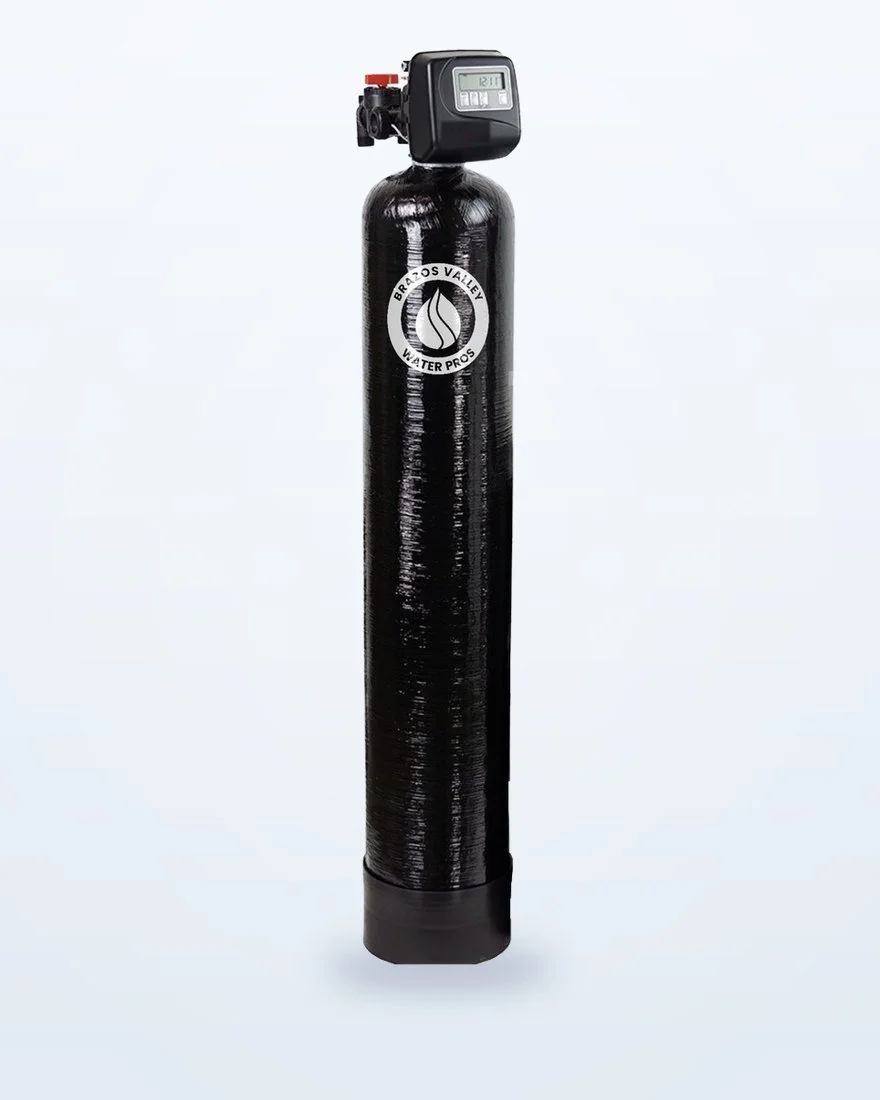
A whole-home carbon filter installs where water enters your house, so every faucet, shower and appliance gets filtered water. Water flows through a tank of activated carbon, which grabs chlorine and many organic compounds as they pass.
The system Brazos Valley Water Pros installs for city homes is a 10" x 54" tank filled with coconut-shell carbon, with a control valve on top. The valve backwashes the carbon on a schedule, so the filter rinses itself clean. There is no salt to add.
Best for: the "pool" smell, chlorine taste, dry skin and hair complaints from chlorinated shower water, and reducing disinfection byproducts throughout the house. Learn more about carbon filtration.
How reverse osmosis works
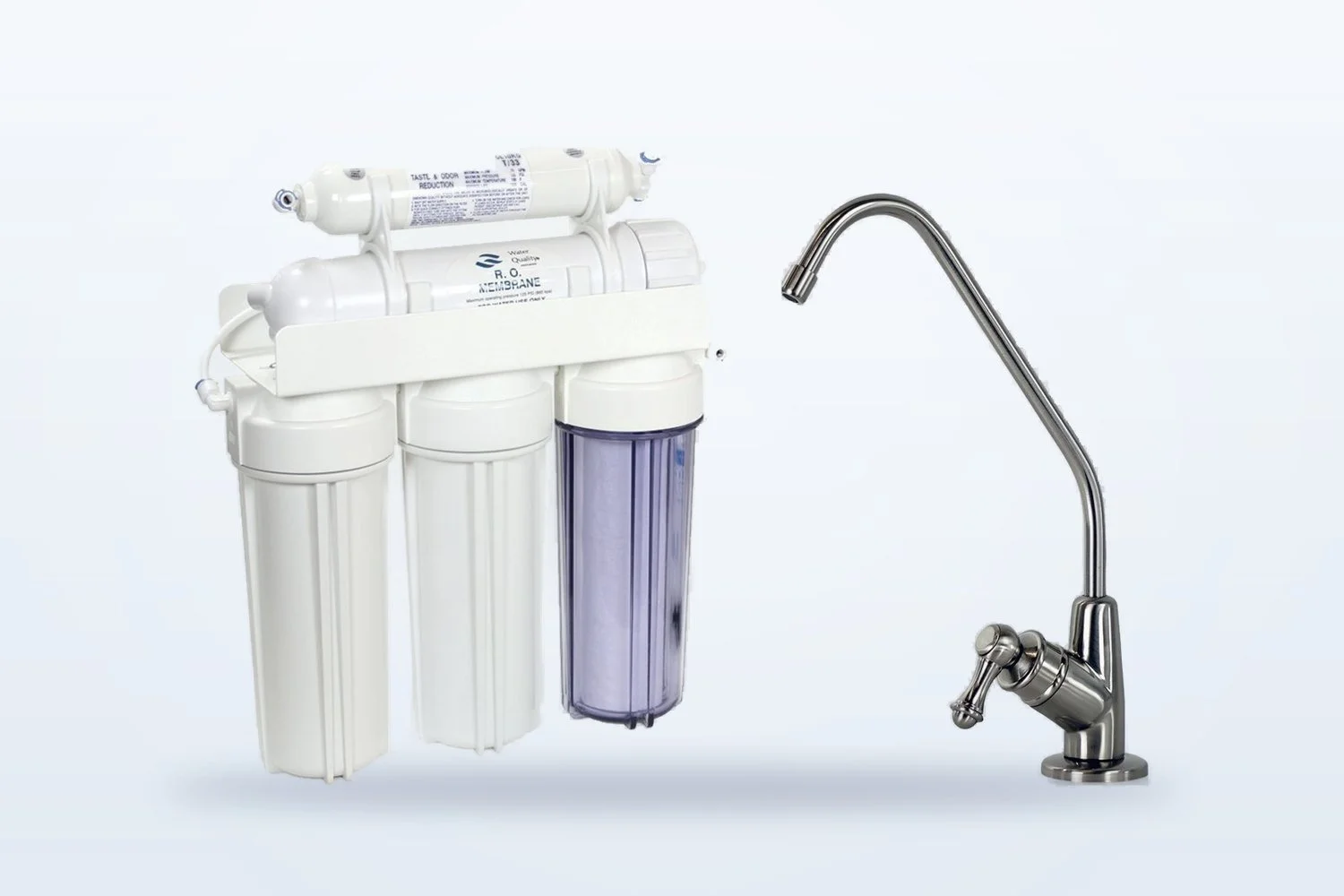
A reverse osmosis system usually sits under the kitchen sink. Water first passes through pre-filters, including carbon, then gets pushed through a very fine membrane that holds back dissolved minerals. The purified water is stored in a small tank and comes out of its own faucet. As it works, the system sends some water down the drain to carry away what it removed.
In Bryan and College Station, RO brings tap water's roughly 560–680 ppm of dissolved solids down to well under 100. That is what removes the salty, flat taste.
Best for: drinking water, coffee, cooking and ice, and anyone watching sodium. Learn more about reverse osmosis.
Side-by-side comparison
| Whole-home carbon | Reverse osmosis | |
|---|---|---|
| Where it works | Every tap and shower | Kitchen sink (drinking water) |
| Chlorine taste & smell | Removes | Removes |
| Disinfection byproducts | Reduces | Reduces |
| Salty taste (sodium, TDS) | No | ~90–95% reduction |
| Shower and laundry water | Yes | No |
| Salt or chemicals to add | None | None |
| Routine upkeep | Backwashes itself; carbon usually lasts 3–5 years on city water | Pre-filters typically yearly; membrane every 2–3 years |
Which one should you get?
- The chlorine smell bothers you most, especially in the shower: start with a whole-home carbon filter. More on getting rid of chlorine smell.
- The salty or flat taste bothers you most, or you are on a low-sodium diet: start with reverse osmosis. More on why the water tastes salty.
- Both bother you: get both. Carbon for the whole house, RO for drinking water.
Common questions
Does a carbon filter remove the salty taste?
Does reverse osmosis remove chlorine?
Can I use reverse osmosis for my whole house?
Do I need both systems?
How much maintenance do these systems need?
More Bryan & College Station water guides
- Why does my tap water taste salty?
- How to get rid of the chlorine smell in your tap water
- Is College Station tap water safe to drink?
- Do you need a water softener in College Station?
- Well water testing in the Brazos Valley
Find out what your water actually needs
Take the free 3-question online quiz, then talk with us by phone or text. We'll recommend a system based on your answers and what we see in water across your area. Every system is installed by licensed independent plumbers, with no high-pressure sales visit.
Get Your Free Water Consultation → Or call or text (979) 721-5597Water figures are approximate values from the City of Bryan and City of College Station water quality reports (Bryan 2025, College Station 2024). Treatment results and maintenance intervals are typical ranges, not tested results; actual life depends on household water use.