Home › Reverse Osmosis › Salty Tap Water
Why Does My Tap Water Taste Salty in College Station & Bryan?
If your tap water tastes a little salty or flat, you are not imagining it. Bryan and College Station groundwater is naturally high in sodium and dissolved solids. Here is where it comes from, whether it matters, and what actually fixes it.
- The salty taste comes from sodium (about 170–250 ppm) and dissolved solids (about 560–680 ppm) that occur naturally in the local groundwater.
- It is a natural trait of the aquifer, not a sign of a leak or a problem with your pipes.
- A water softener will not fix it, and it adds a little more sodium.
- Reverse osmosis at the kitchen sink removes about 90–95% of dissolved solids, including sodium.
Get your free water consultation →Take the 3-question online quiz. It takes under 30 seconds.
It is one of the most common things new residents say about the water here: it tastes a little salty, a little flat, or just "off." Coffee tastes different, and ice cubes can taste odd. The water is treated and tested. What you are tasting is the minerals it naturally carries.
Where the salty taste comes from
Bryan and College Station pump their water from deep wells, mainly in the Simsboro Aquifer, part of the Carrizo-Wilcox system. As water sits in these sand and rock layers underground, it dissolves minerals along the way. In this aquifer, a large share of those minerals is sodium.
Everything dissolved in the water, sodium included, is measured together as total dissolved solids (TDS). The EPA's taste guideline for TDS is 500 mg/L, and water above that level starts to taste salty or mineral-heavy to many people. Both cities are above it.
The numbers for Bryan and College Station
2022 sample, as listed in the city's latest water quality report.
2022 sample, as listed in the city's 2025 water quality report.
College Station about 557, Bryan about 680. EPA's taste guideline is 500.
For comparison, the EPA suggests sodium levels of about 30–60 mg/L for water to taste normal to most people. College Station's 168 mg/L is about 3–6 times that, and Bryan's 247 mg/L about 4–8 times, which is why the taste is so noticeable, especially if you moved here from somewhere with low-mineral water.
Is salty tap water a health concern?
For most healthy people, no. Drinking about 2 liters (roughly 8 cups) of tap water a day adds around 340 mg of sodium in College Station and around 500 mg in Bryan. That is about 15–22% of the FDA's 2,300 mg daily value, and most people get far more sodium from food.
It matters more if you are on a sodium-restricted diet. The EPA's 20 mg/L guidance is for people on a doctor-ordered 500 mg/day sodium diet, and local water is well above that. If your doctor has you watching sodium, ask whether you should drink filtered water. Reverse osmosis brings sodium down to a small fraction of what is in the tap.
Why a water softener makes it worse
Many homeowners are told a water softener will fix the taste. It will not. A softener swaps hardness minerals (calcium and magnesium) for sodium. Bryan and College Station water already tests under 1 grain per gallon of hardness, so there is almost nothing to remove, and a softener does nothing for the sodium already in the water. If you already have a softener on city water, it is adding sodium. Reverse osmosis is what removes it. Read more about whether you need a water softener here.
What actually fixes the salty taste
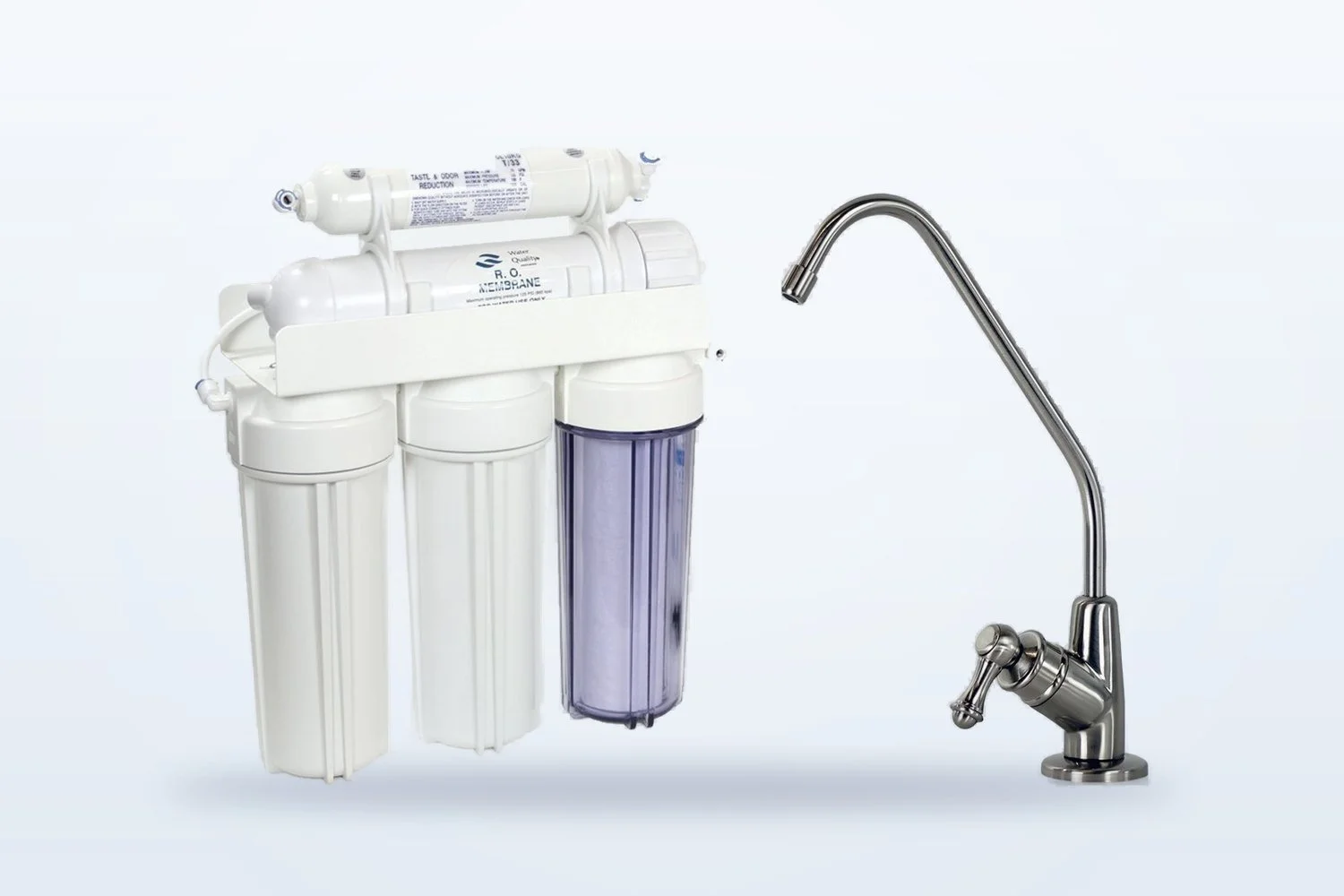
Only one common treatment removes dissolved salts: reverse osmosis. An RO system under the kitchen sink pushes water through a very fine membrane that holds back about 90–95% of dissolved solids. That brings tap water's 560–680 ppm down to well under 100, and the salty taste goes with it.
| Option | Chlorine taste | Salty taste |
|---|---|---|
| Boiling | Reduces | Makes it stronger |
| Pitcher or fridge filter | Reduces | Little effect |
| Water softener | No | Adds sodium |
| Whole-home carbon filter | Removes | No |
| Reverse osmosis | Removes | ~90–95% reduction |
If the chlorine smell bothers you too, a whole-home carbon filter handles that at every tap. Together, carbon for the whole house and RO at the kitchen sink cover what most Bryan and College Station homeowners want.
Common questions
Why does College Station water taste salty?
Is salty tap water safe to drink?
Does boiling water remove the salt?
Will a refrigerator or pitcher filter fix the salty taste?
Will a water softener fix salty-tasting water?
More Bryan & College Station water guides
- Do you need a water softener in College Station?
- How to get rid of the chlorine smell in your tap water
- Reverse osmosis vs. whole-home carbon filter
- Is College Station tap water safe to drink?
- Well water testing in the Brazos Valley
Find out what your water actually needs
Take the free 3-question online quiz, then talk with us by phone or text. We'll recommend a system based on your answers and what we see in water across your area. Every system is installed by licensed independent plumbers, with no high-pressure sales visit.
Get Your Free Water Consultation → Or call or text (979) 721-5597Water figures are approximate values from the City of Bryan and City of College Station water quality reports (Bryan 2025, College Station 2024). Sodium and TDS figures are from 2022–2023 samples listed in those reports. This article is general information, not medical advice.