Home › Water Softeners › Do You Need One?
Good News: You Probably Don't Need a Water Softener in College Station
Bryan and College Station city water is naturally soft. What you're tasting is salt and chlorine, and a softener fixes neither. Here's what's really in your water and what actually helps.
- City water in Bryan and College Station tests under 1 grain per gallon of hardness, which is classified as soft.
- The salty, flat taste comes from sodium and dissolved solids, not hardness. A softener can't remove them, and it adds a little more sodium.
- For better-tasting water, most city homes do well with whole-home carbon filtration and reverse osmosis at the kitchen sink.
- On a private well? You might need a softener. Test first.
Get your free water consultation →Take the 3-question online quiz. It takes under 30 seconds.
If you live in Bryan or College Station, there's a good chance someone has already tried to sell you a water softener. It's the product most water treatment companies lead with. But for most homes on city water here, a softener solves a problem you don't have, and it can leave the problem you do notice untouched.
What's actually in Bryan and College Station city water
Both cities pump groundwater mainly from the Simsboro Aquifer, part of the Carrizo-Wilcox system. It meets every federal and state drinking water standard. But it has three traits that explain almost every complaint we hear:
Classified as soft. Hard water typically starts around 7 grains per gallon.
Above EPA's 500 mg/L taste guideline. This is the "salty" taste.
Naturally high in this aquifer, and the reason the water can taste flat or salty.
On top of that, both cities disinfect with chlorine. It keeps the water safe on its way to your house, but it leaves a pool-like taste and smell, along with disinfection byproducts. Both cities test below the legal limits for these, but they're detectable, and many homeowners prefer to filter them out.
What a water softener does (and doesn't do)
A water softener uses ion exchange: it pulls calcium and magnesium (the minerals that cause hardness) out of the water and swaps in sodium. That's genuinely useful where water is hard. It prevents scale on fixtures, water heaters and dishwashers.
Here's the problem in Bryan and College Station: there's almost no hardness to remove. So on city water, a softener mostly adds:
- Cost for equipment you don't need, plus installation.
- A salt tank you have to keep refilling for as long as you own it.
- More sodium in water that already has plenty.
And it does nothing for the two things people actually notice: the chlorine smell and the salty taste.
Softener vs. carbon filtration vs. reverse osmosis
| Concern | Water softener | Whole-home carbon | Reverse osmosis |
|---|---|---|---|
| Hardness / scale | Removes | No | Removes |
| Chlorine taste & smell | No | Removes | Removes |
| Disinfection byproducts | No | Reduces | Reduces |
| Salty taste (sodium, TDS) | Adds sodium | No | ~90–95% reduction |
| Where it works | Whole house | Whole house | Kitchen sink |
What actually helps
1. Whole-home carbon filtration
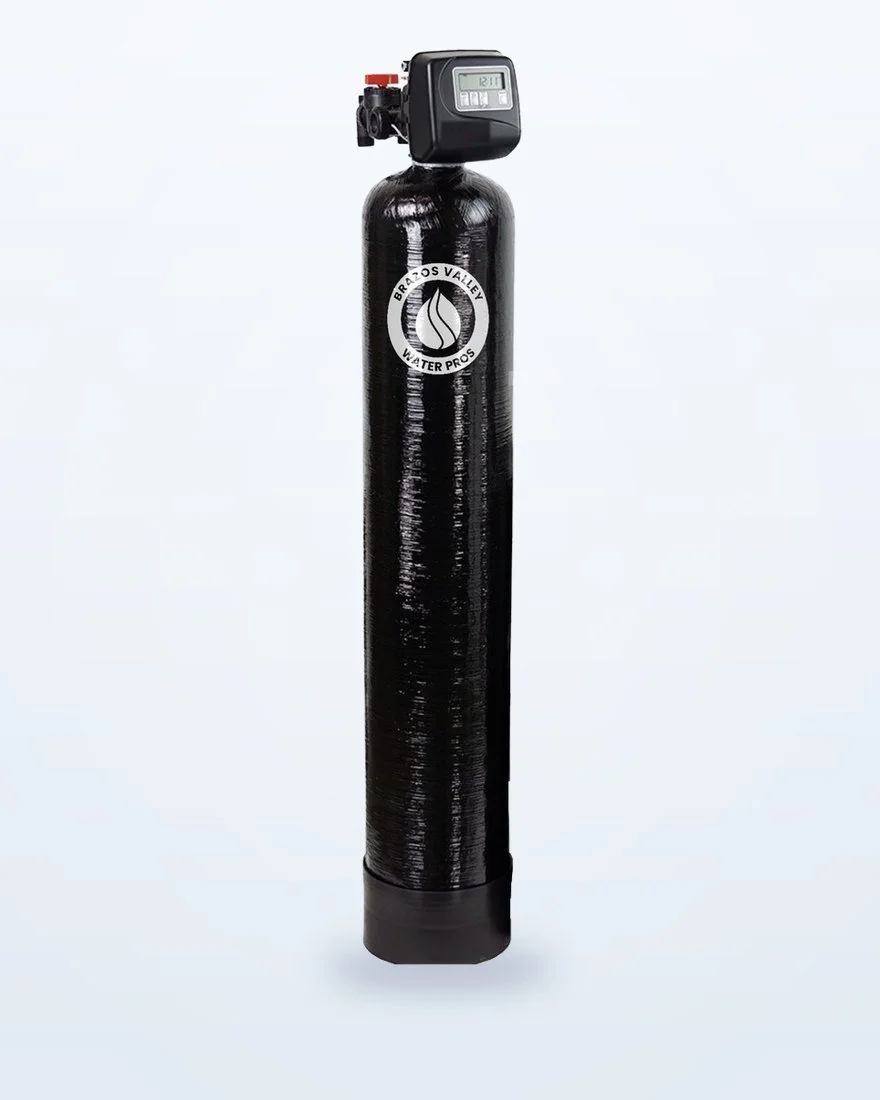
A whole-home carbon system installed where water enters your home reduces chlorine taste and smell at every faucet and shower. It's the fix for "my water smells like a pool."
The system Brazos Valley Water Pros installs is a 10" x 54" tank filled with coconut-shell carbon, with a control valve on top. The valve backwashes the carbon on a schedule, so the filter rinses itself clean. There's no salt to add and no second brine tank, which is how you can tell it apart from a softener.
2. Reverse osmosis at the kitchen sink
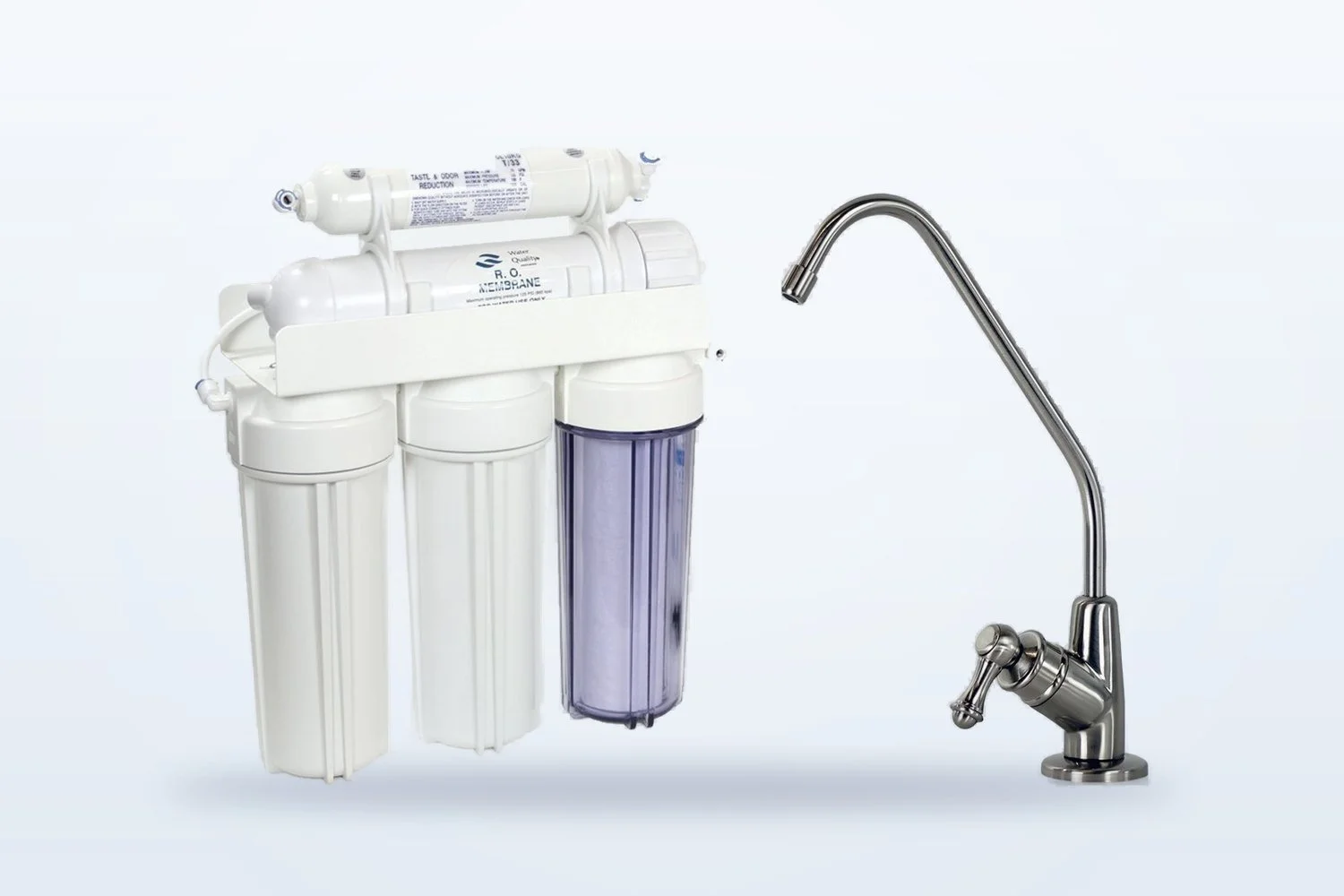
An RO system under the sink reduces the dissolved solids and sodium behind the salty taste, for the water you drink, cook with and make ice from. A reverse osmosis system typically removes about 90–95% of dissolved solids, which brings tap water's 560–680 ppm down to well under 100.
Together, those two cover what most Bryan and College Station homeowners actually want: water that tastes and smells better, without a salt tank. See all of our city water treatment options.
When a softener does make sense
If you're on a private well, the story can be different. Well water around the Brazos Valley varies a lot, and some wells test hard or carry iron or sulfur. In that case a water softener may be the right call. Wells with iron or a sulfur smell may also need catalytic carbon. A lab test of your well water tells you whether you need one. See what to test your well for.
Common questions
Is College Station water hard or soft?
Will a water softener make my water taste better?
Why does my water taste salty?
Do I need a softener if I'm on a well?
How do I know what my home needs?
More Bryan & College Station water guides
- Why does my tap water taste salty?
- How to get rid of the chlorine smell in your tap water
- Reverse osmosis vs. whole-home carbon filter
- Is College Station tap water safe to drink?
- Well water testing in the Brazos Valley
- All water guides
Find out what your water actually needs
Take the free 3-question online quiz, then talk with us by phone or text. We'll recommend a system based on your answers and what we see in water across your area. Every system is installed by licensed independent plumbers, with no high-pressure sales visit.
Get Your Free Water Consultation → Or call or text (979) 721-5597Water figures are approximate values from the City of Bryan and City of College Station water quality reports (Bryan 2025, College Station 2024) and the EWG Tap Water Database. Your home's water can vary; a test gives you exact numbers. Treatment results are general guidance, not a certified performance claim.